























Gurgaon Property Buying Guide: 15 Things to Check Before Buying
Master your real estate purchase with this Gurgaon Property Buying Guide. Discover 15 legal, financial, and structural checks before investing in Gurugram.

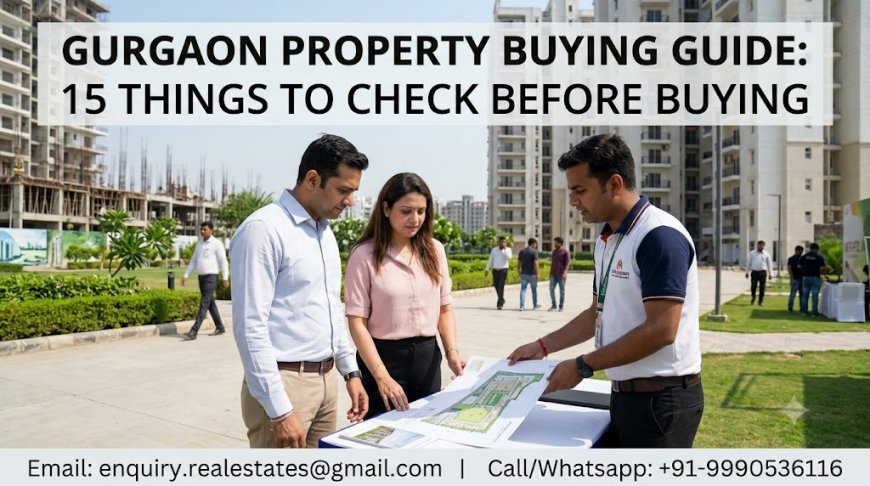
Gurgaon, officially named Gurugram, stands as the financial powerhouse and premier real estate hotspot of the National Capital Region (NCR). Fueled by an influx of fortune 500 companies, world-class expressways, and high-density luxury developments, searching for an Ireo New Project or evaluating high-rise apartments has become a primary vehicle for long-term wealth creation. However, the sheer speed of development in Millennium City requires buyers to exercise rigorous diligence. Following a structured Gurgaon Property Buying Guide is essential to avoid regulatory pitfalls, unexpected financial liabilities, and construction delays. Choosing the right residential property demands far more than reviewing a slick promotional brochure or stepping into a staged sample flat; it requires an exhaustive, multi-layered audit of builder credibility, title authenticity, zoning compliance, and micro-market growth potential.
Whether you are acquiring a luxury apartment for personal residence or expanding a high-yielding real estate portfolio, committing capital to Gurgaon's competitive market requires a methodical verification framework. Modern buyers must balance initial acquisition costs against future capital appreciation, while enforcing legal protections under the Haryana Real Estate Regulatory Authority (HRERA). This comprehensive buyer's checklist breaks down the 15 non-negotiable verification steps, financial calculations, and legal protocols required to secure your real estate investment in Gurgaon.
Gurgaon Property Buying Guide: 15 Critical Verification Checks Before Investing
Section 1: Legal & Regulatory Due Diligence
Check 1: HRERA Registration and Portal Verification
Regulatory compliance is the first line of defense for any homebuyer in Haryana.
-
Mandatory Registration: Ensure the property possesses an active Haryana Real Estate Regulatory Authority (HRERA) registration number. Under state law, developers cannot advertise, market, or execute sales agreements without valid HRERA approval.
-
Online Portal Audit: Visit the official HRERA Gurugram portal (
haryanarera.gov.in) to verify the project's sanction details, approved floor plans, escrow account specifics, and promised completion timelines. -
Litigation History: Check the regulatory portal for pending complaints, consumer disputes, or legal enforcement orders issued against the developer.
Check 2: Clear Land Title Deed and Ownership History
Verifying clear, unencumbered land ownership prevents costly legal disputes after purchase.
-
Title Search: Request a 30-year title search report prepared by an independent legal counsel to trace past ownership transitions.
-
Encumbrance Status: Obtain an official Encumbrance Certificate (EC) from the local sub-registrar's office to confirm the land is free from mortgages, court attachments, or third-party claims.
-
Land Use Conversion: Confirm that the land holds valid Non-Agricultural (NA) certification and official Change of Land Use (CLU) approval from state urban planning authorities.
Check 3: DTCP License & Sanctioned Building Plans
Building without government approvals puts your entire investment at risk of demolition or perpetual legal holds.
-
DTCP License Verification: Confirm that the developer holds a valid license from the Directorate of Town and Country Planning (DTCP) Haryana for the specific sector and acreage.
-
Approved Floor Layouts: Verify that the building layout on-site matches the official plan approved by local authorities. Unsanctioned additional floors or modified common areas are major red flags.
-
Height & Environmental Clearances: High-rise structures require specific clearances from the Airports Authority of India (AAI), State Level Environment Impact Assessment Authority (SEIAA), and the local fire department.
Section 2: Developer Track Record & Financial Viability
Check 4: Developer Delivery History and Execution Standards
A project's ultimate execution quality relies on the reputation, expertise, and discipline of its master developer.
-
Past Track Record: Research previously delivered projects to evaluate construction durability, elevator efficiency, clubhouse management, and adherence to original delivery timelines.
-
Architectural Partners: Established developers routinely collaborate with globally recognized architecture and landscape design firms. For instance, master-planned layouts seen in an Ireo New Project Gurgaon showcase the functional benefits of partnering with top-tier international urban planners.
-
Maintenance History: Visit mature developments delivered by the same builder to talk directly with Resident Welfare Associations (RWAs) regarding long-term maintenance standards.
Check 5: Institutional Banking Approvals
Bank pre-approvals serve as a strong filter for legal and financial risk.
-
Project APF Code: Check if leading nationalized and private banks (e.g., SBI, HDFC, ICICI, Axis) have assigned an Approved Project Finance (APF) code to the development.
-
Due Diligence Delegation: Tier-1 banks conduct rigorous internal legal title checks before clearing a project for home loans. If multiple major banks refuse to fund a project, exercise extreme caution.
Section 3: Micro-Market & Connectivity Analysis
Check 6: Arterial Connectivity and Commute Times
In Gurgaon's expanding landscape, location value depends heavily on direct access to key transportation corridors.
-
Proximity to Corporate Hubs: Measure actual peak-hour commute times to key commercial nodes like Cyber City, Golf Course Road, Udyog Vihar, and Sohna Road.
-
Highway & Expressway Access: Prioritize properties with swift access to major transit links such as the Delhi-Gurgaon Expressway (NH-48), Dwarka Expressway (NPR), Southern Peripheral Road (SPR), and Golf Course Extension Road.
-
Public Transit Integration: Check the distance to existing or planned Gurgaon Metro stations, Rapid Metro lines, and the upcoming Rapid Rail Transit System (RRTS) corridors.
Check 7: Social Infrastructure Density within a 15-Minute Radius
A residential investment must offer daily lifestyle convenience for long-term comfort and rental demand.
-
Educational Institutions: Ensure top-tier international schools are accessible within a short driving radius.
-
Healthcare Facilities: Confirm proximity to multi-specialty hospitals like Medanta, Fortis, Artemis, or Max Healthcare.
-
Retail and Entertainment: Evaluate access to high-street retail centers, shopping malls, supermarkets, and dining hubs.
Section 4: Architectural Design & Layout Efficiency
Check 8: Carpet Area Efficiency vs. Super Area Pricing
Understanding space measurement prevents overpaying for unusable common areas.
-
Carpet Area Clarity: Under HRERA, developers must explicitly quote prices based on carpet area—the actual usable net floor area inside the apartment walls.
-
Loading Factor Calculation: Calculate the loading percentage:
[(Super Area - Carpet Area) / Carpet Area] * 100. A loading factor above 30% to 35% means a large portion of your money goes toward shared corridors, lobbies, and elevator shafts. -
Practical Room Layouts: Review architectural floor plans to ensure efficient room proportions, minimal hallway space, adequate wardrobe niches, and functional utility balconies.
Check 9: Open Space Ratio and Density Factors
Living comfort in high-rise communities depends on population density and open green space allocation.
-
Green Coverage: High-end integrated developments dedicate 75% to 80% of project land to landscaped gardens, open parks, and pedestrian zones.
-
Low-Density Advantages: Look for developments with fewer units per acre and limited apartments per floor. Low-density projects ensure quieter environments, increased natural light, and shorter elevator wait times.
-
Integrated Township Value: Large master-planned complexes offer self-contained ecosystem benefits. Prominent projects like Ireo Corridors exemplify low-density township planning on SPR, integrating expansive open greens, modern sports courts, and dedicated commercial zones within a gated sector.
Section 5: Financial Outlay & Contractual Safeguards
Check 10: Complete Cost Outlay Beyond Base Sale Price (BSP)
The total cost of acquiring property in Gurgaon routinely exceeds the Base Sale Price by 15% to 25%.
-
EDC and IDC: External Development Charges and Infrastructure Development Charges levied by state authorities for city-level infrastructure development.
-
Preferential Location Charges (PLC): Premium costs applied for park-facing units, pool views, corner locations, or specific floor levels.
-
GST Impact: Under-construction flats carry a 5% GST without Input Tax Credit. Ready-to-move properties with an Occupancy Certificate (OC) are completely exempt from GST.
-
Stamp Duty and Registration: In Haryana, stamp duty rates are 7% for male buyers, 5% for female buyers, and 6% for joint purchases in municipal areas, along with fixed registration fees.
Check 11: Payment Plan Structure and Milestone Alignments
Choosing the right payment plan minimizes financial risk during construction.
-
Construction-Linked Plan (CLP): The safest option for under-construction properties, where payments are tied directly to verified physical construction milestones (e.g., foundation, slab casting, plastering).
-
Possession-Linked Plans (PLP): Structures like 30:70 or 25:75 require a down payment upfront, with the remaining balance due upon notice of possession. Verify that loan interest terms are clear during the interim period.
-
Avoid Down Payment Plans: Paying 80% to 90% upfront in exchange for minor discounts creates high financial risk if construction stalls.
Check 12: Builder-Buyer Agreement (BBA) Clauses
Never sign a Builder-Buyer Agreement without thoroughly reviewing its legal clauses.
-
Standardized HRERA Agreement: Ensure the BBA uses the HRERA-mandated standard template to eliminate unfair, one-sided terms.
-
Delay Compensation Parity: The interest rate charged to buyers for delayed payments must equal the compensation interest rate paid by the developer for delayed construction delivery.
-
Grace Periods: Check for excessive "force majeure" extensions or hidden grace period clauses that push back official possession dates.
Section 6: Post-Construction & Long-Term Operational Checks
Check 13: Occupancy Certificate (OC) and Completion Certificate (CC)
Taking possession without official municipal certifications is illegal and unsafe.
-
Occupancy Certificate (OC): Issued by local urban planning bodies (DTCP/MCG), an OC certifies that the building has been constructed according to approved plans and is safe for human habitation.
-
Completion Certificate (CC): Confirms that all utility connections, fire safety protocols, sewage treatment plants, and lift operations are fully functional.
Check 14: Maintenance Structure and IFMS Terms
Ongoing monthly operational costs affect both living expense budgets and rental yields.
-
Interest-Free Maintenance Security (IFMS): A standard one-time deposit collected upfront at possession. Clarify how these funds are escrowed and transferred to the Resident Welfare Association (RWA).
-
Monthly CAM Charges: Review Common Area Maintenance (CAM) rates per square foot. Multi-tier security systems, Olympic-sized pools, and expansive clubhouses increase monthly CAM fees.
-
Power Backup & Water Supply: Verify dual-source power backup infrastructure and municipal water supply allocations versus reliance on water tankers.
Check 15: Rental Yields, Resale Liquidity & Capital Growth Potential
Evaluate the long-term investment viability of the property before finalizing the purchase.
-
Prevailing Rental Yields: Average residential rental yields in Gurgaon range between 3% and 5% annually, with higher yields found in well-connected integrated townships along SPR and Golf Course Extension Road.
-
Resale Liquidity: Properties built by reputed tier-1 developers with modern clubhouse amenities and low loading factors enjoy significantly higher resale demand.
-
Township Ecosystem Demand: Master-planned gated sectors like Ireo The Corridors on Southern Peripheral Road attract high rental demand from corporate professionals working along Sohna Road and Golf Course Extension due to their comprehensive lifestyle amenities, lush open spaces, and security standards.
Micro-Market Deep Dive: Selecting the Right Sector
Gurgaon's real estate market operates across distinct micro-markets, each offering unique price points, connectivity advantages, and investment horizons.
1. Golf Course Extension Road & Southern Peripheral Road (SPR)
This corridor has emerged as the premier destination for modern luxury integrated townships.
-
Infrastructure Synergy: Seamless connectivity to Cyber City, Sohna Road, and NH-48 makes SPR a top choice for corporate executives and NRI buyers.
-
Township Focus: Premium gated developments in these sectors offer integrated high-street retail, sports complexes, and lush green views. Communities like Ireo Corridors Sector 67A demonstrate how strategic SPR positioning combined with comprehensive internal amenities drives long-term asset value and steady rental appreciation.
2. Sector 67A Alignment
Sector 67A provides a balance of quiet residential living and immediate access to commercial hubs.
-
Accessibility: Direct links to Sohna Road elevated highway, SPR, and Golf Course Extension Road ensure swift transit across the city.
-
Living Experience: Master-planned developments such as Ireo Corridors Sector 67A Gurgaon highlight how gated sector planning with multi-tier security and dedicated clubhouses provides an elevated quality of life for modern families.
3. Dwarka Expressway (Northern Peripheral Road)
Dwarka Expressway represents one of northern India's fastest-growing residential corridors.
-
Growth Drivers: Direct expressway connectivity to West Delhi, proximity to Diplomatic Enclave II, and short travel times to IGI Airport drive steady capital appreciation.
4. New Gurgaon (Sectors 81 to 95)
Positioned between NH-48 and the Kundli-Manesar-Palwal (KMP) Expressway, New Gurgaon caters to first-time homebuyers and long-term rental investors seeking affordable luxury gated communities.
Step-by-Step Decision Roadmap for Buyers
To ensure a smooth, secure purchase journey, follow this step-by-step checklist from initial research to final handover:
-
Establish a Realistic Capital Budget: Define your total acquisition budget including home loan pre-approvals, stamp duty, GST, interior costs, and maintenance reserves.
-
Shortlist Micro-Markets: Select 2 or 3 target sectors based on daily commute times, school proximity, and surrounding commercial infrastructure.
-
Perform Legal Due Diligence: Hire an independent real estate advocate to review title deeds, HRERA filings, DTCP licenses, and non-encumbrance certificates.
-
Conduct On-Site Inspections: Visit the project site in person to evaluate construction velocity, structural quality, loading ratios, and neighborhood traffic flow.
-
Compare Payment Structures: Select Construction-Linked Plans (CLP) for under-construction units to protect your capital against project delays.
-
Review the Builder-Buyer Agreement: Ensure all delay penalty clauses, possession schedules, and specification lists match HRERA guidelines before signing.
-
Verify OC Before Final Settlement: Never accept key handovers or pay final possession dues without verifying an official Occupancy Certificate issued by local authorities.
Market Research, Consumer Trends & Industry Data
Recent real estate industry reports highlight key buyer trends across Gurgaon's property landscape:
-
Consolidation Around Reputed Developers: Over 75% of residential sales in Gurgaon concentrate among established developers with strong balance sheets and proven delivery track records.
-
Preference for Larger Configurations: Demand for 3BHK and 4BHK apartments with dedicated work-from-home spaces and large balconies has grown significantly.
-
Focus on Master-Planned Townships: Integrated township developments offering sports facilities, high-street retail, and expansive green zones command a 15% to 20% price premium over standalone apartment towers due to higher end-user satisfaction and rental demand.
-
Appreciation Trends: Sectors along Golf Course Extension Road and SPR, including developments like Ireo Corridors Gurgaon, have demonstrated consistent capital growth supported by completed road networks and corporate office expansions.
Future Outlook: Gurgaon Real Estate Transformation
Gurgaon’s property market continues to evolve, driven by technology adoption, sustainable construction, and major infrastructure upgrades.
-
Sustainable and Green-Certified Buildings: Future-ready developments integrate solar energy generation, rainwater harvesting, sewage treatment plants, and EV charging infrastructure to minimize environmental impact and lower operational CAM costs.
-
Smart Home Technology Integration: Biometric security locks, home automation systems, smart lighting, and fiber-optic backbones are becoming standard inclusions in new luxury launches.
-
Infrastructure Expansions: Projects like the Gurgaon Metro expansion, new peripheral feeder roads, and smart traffic management systems will continue to unlock capital value across emerging micro-markets.
-
Mandatory Legal Audits: Always verify HRERA registration, land title deeds, and DTCP licenses before paying booking deposits.
-
Focus on Carpet Area: Evaluate apartment pricing based on usable carpet area and keep loading factors below 30% to 35%.
-
Budget for Hidden Costs: Factor in an additional 15% to 25% above the Base Sale Price for GST, stamp duty, EDC/IDC, PLC, and maintenance deposits.
-
Prioritize Location Connectivity: Choose sectors with direct access to major transit links like SPR, Golf Course Extension Road, or Dwarka Expressway to secure strong capital growth and rental returns.
-
insist on Construction-Linked Payment Plans: Use milestone-linked payment structures (CLP) to ensure your money is disbursed only as physical construction progresses on site.
Frequently Asked Questions
What is the most important document to check before buying a property in Gurgaon?
The most important legal document is the HRERA registration certificate along with a clear Land Title Deed and DTCP license, which verify that the project is legally approved by state authorities.
How do I verify if a project in Gurgaon is HRERA approved?
You can verify HRERA approval by visiting the official Haryana RERA web portal at haryanarera.gov.in and searching for the project's unique registration number.
What is the difference between super area and carpet area?
Carpet area is the net usable floor space inside the apartment walls, while super area includes the carpet area plus shared common spaces like lobbies, corridors, and elevator shafts.
Is GST applicable on ready-to-move flats in Gurgaon?
No, ready-to-move flats that have received an Occupancy Certificate (OC) from local authorities are completely exempt from GST. Under-construction flats carry a 5% GST rate.
What is the standard stamp duty rate in Gurgaon?
Stamp duty rates in Haryana are 7% for male buyers, 5% for female buyers, and 6% for joint ownership in urban municipal areas like Gurgaon.
Why should I choose a Construction-Linked Plan (CLP)?
A Construction-Linked Plan is safer because loan disbursements are tied directly to verified physical construction milestones completed on site, protecting buyers from delay risks.
What is an Occupancy Certificate (OC) and why is it mandatory?
An Occupancy Certificate is issued by local urban planning bodies certifying that the building complies with approved plans and safety standards, making it legal and safe for habitation.
What are External Development Charges (EDC) and Infrastructure Development Charges (IDC)?
EDC and IDC are mandatory state-levied charges collected by developers to fund city-level infrastructure such as arterial roads, water lines, electricity networks, and drainage systems.
Which corridors in Gurgaon offer strong capital appreciation potential?
Southern Peripheral Road (SPR), Golf Course Extension Road, Sector 67A, and Dwarka Expressway offer strong appreciation potential due to expanding commercial hubs and modern road infrastructure.
How much extra budget should I plan above the Base Sale Price (BSP)?
You should budget an additional 15% to 25% above the BSP to cover mandatory costs like GST, stamp duty, EDC/IDC, PLC, registration fees, and maintenance security deposits.
What is a loading factor in residential real estate?
The loading factor represents the percentage difference between the super area and the carpet area, reflecting the proportion of shared common spaces included in your purchase price.
Can a developer charge different interest rates for delayed payments than delayed delivery?
No, under HRERA regulations, the penalty interest rate charged to buyers for delayed payments must equal the interest rate paid by developers to buyers for delivery delays.
Why are low-density developments preferred by luxury buyers?
Low-density developments have fewer units per acre and per floor, providing greater privacy, quieter living environments, shorter elevator wait times, and higher per-unit land share.
What role does an Encumbrance Certificate play in property legal checks?
An Encumbrance Certificate proves that the property land is free from active legal disputes, financial mortgages, court attachments, or outstanding loans.
Are integrated townships better investments than standalone buildings?
Yes, integrated townships offer master-planned ecosystems with gated multi-tier security, dedicated sports facilities, green parks, and retail plazas, resulting in higher rental yields and resale liquidity.
Final Thoughts
Purchasing property in Gurgaon represents a significant financial commitment that can yield substantial lifestyle comfort and long-term capital wealth when approached with proper diligence. By using this 15-step verification guide ranging from legal HRERA validation and carpet area checks to financial planning and micro-market analysis—you can navigate Millennium City's dynamic real estate market with complete confidence. Take the time to conduct independent legal searches, inspect physical construction quality, evaluate surrounding social infrastructure, and select milestone-linked payment plans before executing your purchase. Thorough due diligence today secures your peaceful ownership and financial returns for decades to come.