
























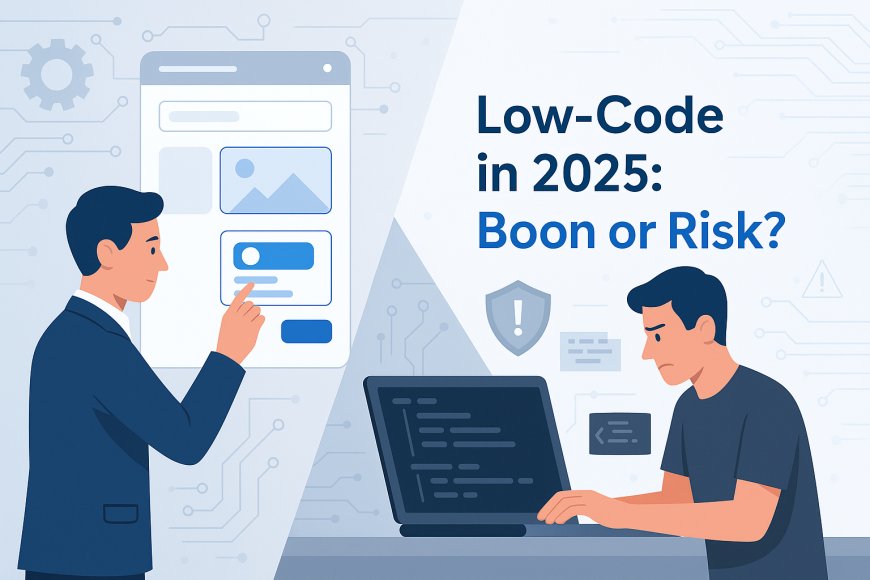
Low-Code App Development for Enterprises: A Boon or a Risk in 2025?
Low-code app development is transforming how enterprises build software in 2025 — but is it all upside? This blog explores the benefits, risks, and real-world impact of low-code platforms in enterprise environments. From faster innovation to vendor lock-in concerns, get a complete breakdown to decide if low-code is the right strategy for your business transformation journey.
In todays digital-first world, speed and adaptability arent just nice to have theyre essential. Businesses are under pressure to innovate faster, reduce operational costs, and keep up with shifting customer expectations. Thats where low-code app development platforms step in. These platforms allow companies to build custom applications with minimal coding, using drag-and-drop tools, templates, and visual workflows.
As we move through 2025, low-code development isnt just a passing trend it's becoming a go-to approach for enterprise digital transformation. But heres the big question: Is low-code a real game-changer for enterprises, or could it backfire if not handled carefully?
Lets unpack the pros and cons.
What Is Low-Code App Development?
Low-code development platforms (or LCDPs) make app building faster and more accessible. Tools like OutSystems, Mendix, Microsoft Power Apps, and Appian empower not just seasoned developers, but also "citizen developers" business users who can create apps without deep coding skills.
These platforms help you:
-
Automate internal processes
-
Create approval workflows
-
Build customer portals and dashboards
-
Integrate with older systems without complex rewrites
Its about speed, simplicity, and flexibility.
Why Enterprises Are Turning to Low-Code in 2025
1. Faster Time to Market
Low-code enables teams to deliver in weeks instead of months. When market demands shift quickly, this speed gives companies a serious competitive edge.
2. Bridging the Talent Gap
With the developer shortage still looming in 2025, low-code gives business teams the tools to solve their own challenges reducing reliance on overloaded IT departments.
3. Lower Costs
Less development time and fewer resources mean lower project costs. For enterprises, this can translate into big savings across departments.
4. Legacy Integration Made Easy
Modern platforms come with out-of-the-box connectors and integration tools, helping bridge the gap between new apps and old systems.
5. Encouraging Innovation
When teams have the ability to test, prototype, and iterate quickly, innovation becomes part of the everyday workflow not just something reserved for IT.
The Upside: Real Business Wins
Empowering More People to Build
Low-code opens the door for non-developers to create meaningful solutions from HR to finance to operations.
Cleaner, Consistent Design
Most platforms offer modern UI libraries and design templates, ensuring all apps have a polished and consistent look.
Built-In Governance Tools
Worried about security or compliance? Dont be. Leading platforms include audit logs, access controls, and permissions to keep things secure and compliant.
Scales With You
Todays low-code platforms arent just for small apps. Many now support full-scale enterprise deployments, DevOps, and automated testing.
Cross-Device Compatibility
One codebase, multiple devices. Build once and run it on mobile, web, or tablet without rewriting everything.
The Catch: What You Need to Be Careful About
Locked Into One Vendor
Many platforms make it difficult to move your app outside their ecosystem. If you need to switch later, it could be a painful transition.
Security Gaps
Giving non-technical staff the power to build apps can lead to mistakes especially if your company doesnt have proper oversight or review processes.
Not Always Built for Scale
Heavy-duty enterprise apps that rely on AI, complex data models, or high-performance backends may push beyond what a low-code platform can comfortably handle.
Uncontrolled Shadow IT
Without clear rules, teams might build apps outside of ITs view. This can lead to data silos, compliance issues, and headaches for your infrastructure team.
Customization Limits
Need highly tailored features? You might hit a wall. Some functionality still requires custom code and not all platforms make that easy.
Whats New in 2025: Low-Code Trends to Watch
-
AI Assistance: Many platforms now use AI to help generate logic, validate code, or even write documentation.
-
Modular App Design: Build apps with plug-and-play components that scale effortlessly.
-
Low-Code + Pro-Code Fusion: Developers can work alongside citizen builders, customizing logic as needed.
-
Enterprise-Grade Compliance: Platforms are doubling down on audit tracking, role-based permissions, and data residency options.
-
Industry-Specific Solutions: Expect more out-of-the-box templates for industries like healthcare, finance, and logistics.
When Low-Code Works Best
Its a great fit if:
-
Youre building internal tools or customer-facing MVPs
-
Your team is low on dev resources but high on process knowledge
-
You need to integrate legacy systems without starting from scratch
But maybe not ideal if:
-
Your app needs advanced data modeling, machine learning, or custom APIs
-
You want full control over infrastructure and source code
-
Youre building a public, high-performance product at scale
So, Is It a Boon or a Risk?
The answer: it depends on how you use it.
Low-code development in 2025 can absolutely be a boon empowering more people, accelerating innovation, and reducing time to value. But like any tool, it comes with trade-offs.
Success hinges on setting the right guardrails:
-
Define governance policies
-
Monitor shadow IT activity
-
Train your citizen developers
-
Blend low-code with traditional development when needed
With the right strategy and support, enterprises can unlock serious value from low-code platforms without compromising on quality, security, or scalability.